
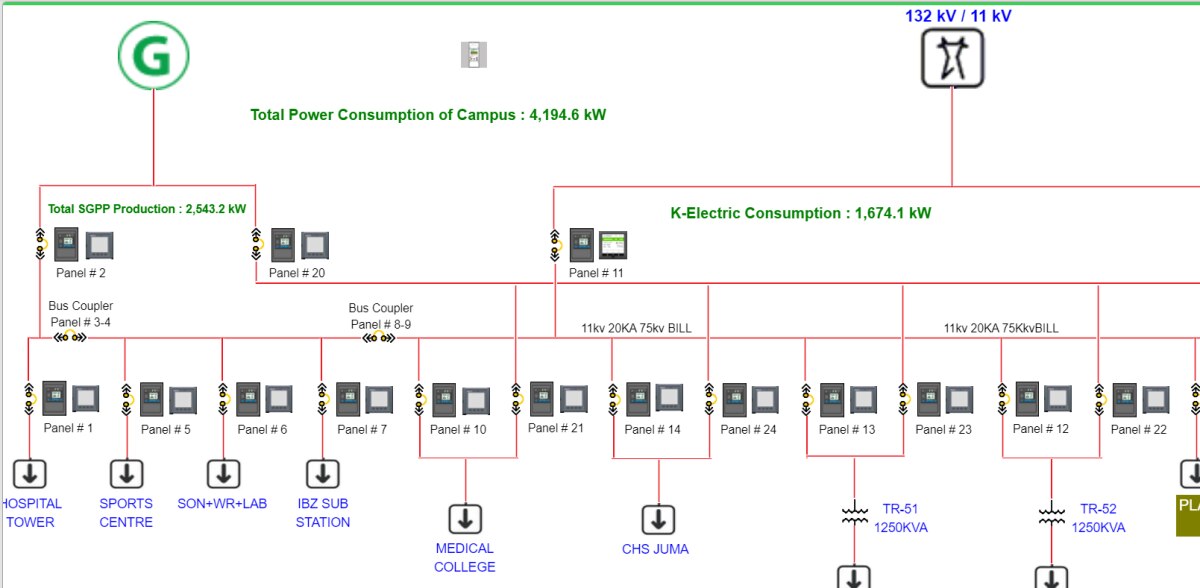
⚡ EMS Real-Time Monitoring & Management Dashboard
The Energy Management System (EMS) dashboard delivers a powerful, all-in-one platform to monitor, analyze, and optimize your electrical infrastructure in real time. Designed for facility managers, engineers, and energy professionals, this dashboard transforms complex electrical data into clear, actionable insights, helping you reduce costs, improve reliability, and meet sustainability goals.
🟢 Real-Time Electrical Parameters
⚡ Voltage: Displays phase-to-phase and phase-to-neutral voltages with color-coded alerts to quickly spot deviations that might affect equipment performance or safety.
🔌 Current: Shows current for each phase and neutral conductor, enabling detailed load balancing and detection of overloads or faults before they cause downtime.
⏱️ Frequency: Monitors system frequency continuously to ensure grid stability and generator performance, with alerts for abnormalities.
🔋 Power: Active (kW), reactive (kVAR), and apparent power (kVA) are presented in real time, providing a comprehensive picture of power flow and efficiency.
📐 Power Factor: Total and per phase power factor readings highlight opportunities to improve energy efficiency and reduce utility penalties.
📊 Energy Consumption: Tracks cumulative energy usage (kWh, kVARh, kVAh), including import, export, and net values, supporting accurate billing, budgeting, and sustainability reporting.
📈 Demand: Displays real-time and peak demand figures, with historical trends to help optimize load management and prevent costly demand charges.
📉 Total Harmonic Distortion (THD): Measures voltage and current distortion levels to safeguard equipment and ensure power quality compliance.
🛠️ Equipment Health & Operational Status
🔒 Breaker Status: Clear indicators of breaker positions (open/closed) help operators quickly assess system configuration and safety status.
🔋 UPS Status: Monitors uninterruptible power supply states (normal, battery mode, bypass), ensuring critical loads stay powered during disturbances.
⛽ Generator Status: Displays generator operational state (running, standby, fault), essential for emergency preparedness and maintenance scheduling.
🛠️ Maintenance Alerts: Integrates with alarms and event logs to notify personnel of equipment anomalies, faults, or routine maintenance requirements, reducing downtime risks.
📅 Historical Data & Reporting
📈 Trend Analysis: Interactive charts display electrical parameter trends over customizable timeframes (hours, days, months), enabling root-cause analysis and proactive energy management.
📋 Custom Reports: Automatically generate energy consumption, power quality, and demand reports for stakeholders, compliance audits, and sustainability tracking.
🔄 Export & Integration: Supports data export and integration with building management systems (BMS), SCADA, and enterprise energy software for seamless workflows.
🎯 Custom KPIs & Energy Goals
Define and monitor key performance indicators (KPIs) such as energy intensity (kWh per unit of production), carbon footprint, cost savings, and equipment efficiency to align energy management efforts with corporate objectives.
🌐 User-Friendly Interface & Navigation
Intuitive dashboards with drag-and-drop widgets, color-coded alarms, and interactive diagrams allow users to tailor views to their roles and preferences.
Multi-device access ensures critical data is available anytime, anywhere—on desktops, tablets, or smartphones.
🔒 Security & Access Control
Role-based permissions safeguard sensitive data while enabling collaboration across teams.
Audit trails keep track of changes and user activity for accountability and compliance.
Benefits at a Glance:
🔍 Improved visibility into energy consumption and system health
💡 Proactive issue detection and faster troubleshooting
💰 Cost savings through optimized energy use and demand management
🌍 Support for sustainability and regulatory compliance
⚙️ Enhanced equipment life and reduced maintenance costs
⚡ Voltage: The dashboard displays phase-to-phase and phase-to-neutral voltages with color-coded alerts. This helps quickly identify voltage issues affecting equipment performance.
🔌 Current: Current values for each phase and the neutral conductor are shown in real time. This enables precise load balancing and early detection of overloads or faults.
⏱️ Frequency: System frequency is continuously monitored to ensure grid stability. Alerts notify operators immediately if deviations occur.
🔋 Power: Active (kW), reactive (kVAR), and apparent power (kVA) values provide a complete picture of power consumption and efficiency. These help optimize energy use.
📐 Power Factor: The total and per-phase power factor is displayed to highlight energy efficiency. Maintaining a good power factor reduces utility penalties and improves system health.
📊 Energy Consumption: Energy usage is tracked in kWh, kVARh, and kVAh, including import, export, and net values. This supports accurate billing and energy management.
📈 Demand: Real-time and peak demand figures are shown with historical trends. This helps manage load profiles and avoid demand charges.
📉 Total Harmonic Distortion (THD): Voltage and current THD levels are monitored to protect equipment and ensure power quality. Alerts trigger if distortion exceeds safe limits.
🔒 Breaker Status: Breaker positions (open/closed) are clearly indicated for safety and system configuration awareness. This aids quick troubleshooting.
🔋 UPS Status: UPS states (normal, battery, bypass) are displayed to ensure critical loads remain powered during outages. This supports reliable backup power.
⛽ Generator Status: Generator operational states such as running, standby, or fault are shown. This is essential for emergency readiness and maintenance planning.
🛠️ Maintenance Alerts: The system integrates alarms and logs to notify about equipment faults or scheduled maintenance. This helps reduce downtime risks.